Announcing the next-generation Lunar System and Fast Charger
Energy keeps moving closer to home. More power is being generated and stored where it’s needed, while smart hardware and software are making it easier to manage that energy and put it to work for the grid. This shift puts more control in the hands of homeowners and business owners, helping make energy more affordable, reliable, and faster to deploy. That’s the promise of distributed energy.
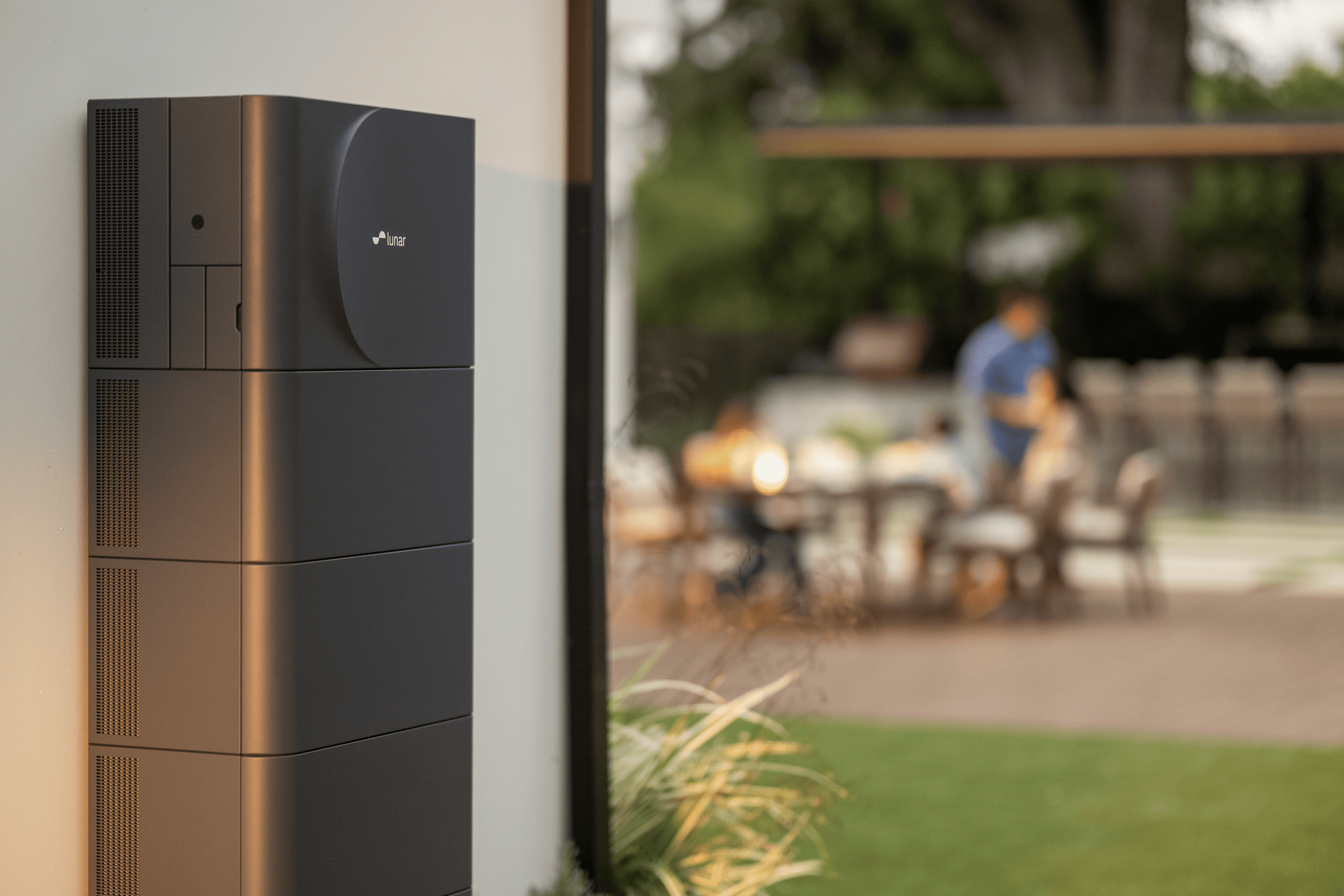
Today, we’re taking a big step to move this vision forward by unveiling the latest evolution of our products, featuring our next-generation Lunar System and Lunar Fast Charger, an all-new bidirectional electric vehicle (EV) charger, alongside expanded software capabilities.
Together, these updates expand what the Lunar System can do, where it can work, and who can benefit from it.
No two homes use energy in exactly the same way. The new Lunar System is designed with that flexibility in mind, giving more customers just the right power and capacity they need.
Its industry-leading 13.4 kW inverter can handle the demands of larger homes, small businesses, and energy-hungry appliances. The Lunar Battery’s modular design lets customers scale from 10 to 30 kWh of storage in a single tower, up to 300 kWh total when stacked side by side. Whether it’s paired with new rooftop solar, integrated with an existing solar installation, or used as a standalone battery, Lunar is built to fit.
This flexibility also extends beyond the home — over 7 million U.S. businesses have energy needs that aren’t well served by today’s battery options. The new Lunar System works with these commercial properties, too, including a new pad-mounted configuration that gives businesses more options for where and how they add storage, with modular systems that can deliver 1 MWh in 4 parking spaces.
As more households adopt EVs, a major energy asset is arriving in the driveway. Our new bidirectional EV charger brings that asset into the Lunar System, so the car can work intelligently alongside the home’s solar and battery.
Instead of treating EV charging as a separate task, Lunar automatically decides when and where to charge based on energy costs and what the home needs. It also brings an exceptionally high level of charging power into the home: up to 25 kW, enough to add roughly 100 miles of range in an hour. That speed gives Lunar AI more flexibility to co-optimize charging across the EV and Lunar Battery, taking advantage of lower-cost electricity when it’s available to help minimize customer costs.
Energy can flow the other way, too. During an outage, a compatible EV can help power the home for days, adding another layer of backup when the grid is down. No extra grid-interfacing devices are needed — the Lunar Fast Charger simply plugs into the DC side of the Lunar Battery. And as utilities and energy providers roll out vehicle-to-grid (V2G) programs, Lunar will help customers use their EVs to support the grid and get paid for the energy they provide.
While cutting-edge hardware is exciting, we’ve always maintained that it's only as good as the software behind it. That’s where Lunar AI comes in, working behind the scenes in real time to decide when energy should be stored, used, or shared based on factors like a home's energy use, electricity rates, and weather patterns.
Last year, customers in California using Lunar AI saved an additional $338 on average compared with a standard battery operating mode. As electricity rates and energy markets become more complex, that same intelligence can adapt to different homes, rate plans, and energy needs.
On a larger scale, Lunar Gridshare connects more than 150,000 distributed energy devices around the world so they can work together when the grid needs them most. In California alone, Gridshare delivered over 112 MW on October 5th during a period of high grid demand, and has dispatched batteries grouped under 25 different PG&E substations to reduce strain on the grid where and when it arose.
Great energy products are only great if they’re accessible. That’s why we’re expanding the ways customers can get a Lunar Battery, working with installers, distributors, energy retailers, cooperatives, and community energy providers.
In Texas, our PowerStore program with Octopus Energy pairs a Lunar Battery with a three-year fixed-rate electricity plan, giving customers one monthly price with no upfront battery cost. PenTex Energy, a member-owned cooperative headquartered in Cooke County, Texas, will deploy 10 MW of Lunar batteries, giving members backup power while helping the cooperative reduce costs.
We’ve taken a similar approach with community energy providers in California. Through Ava Community Energy’s SmartHome Battery program, for example, customers can receive more than $2,000 toward a home battery and $200 each quarter for participating in the program.
We’re working hard to bring more of these options to more customers across the country. While the model may look different from one community to the next, the goal is the same: make reliable, affordable home energy easier for more people to access.
We believe every home will eventually have a battery. To get there, we’re building an energy system that can be scaled to different homes and businesses, bring new resources like EVs into the mix, and intelligently coordinate all of that energy for customers and the grid.
That’s what the next generation of Lunar Energy is designed to do. Our new Lunar System will begin reaching customers in early 2027, followed by the Lunar Fast Charger in mid-2027.
Explore the next-gen Lunar System.