Design your System
Save money, make money, avoid grid outages, and power your life with clean energy day and night.
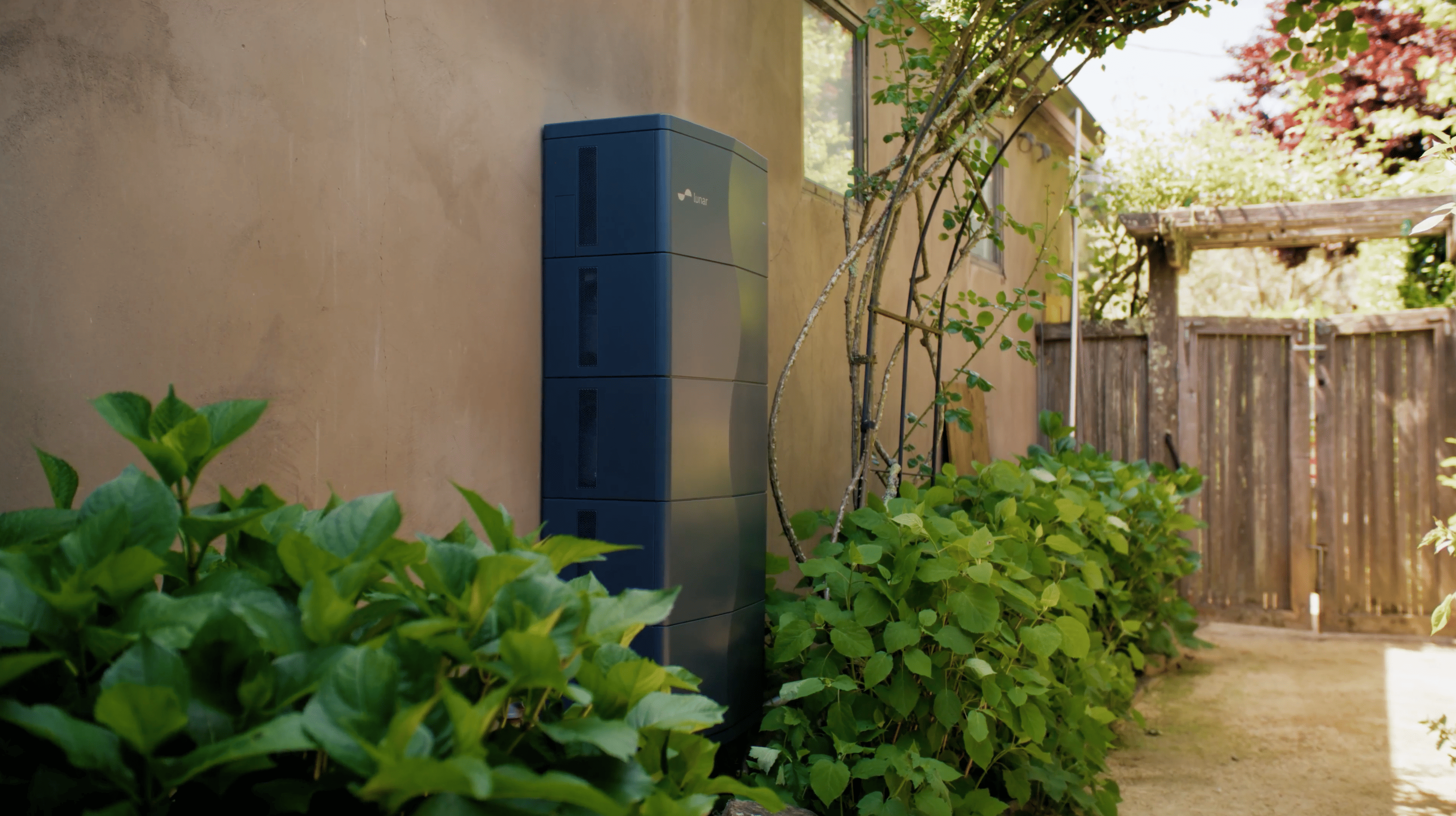
After 11 years of living with solar, Ryan knew his system needed a refresh and he needed to get in control of his ever rising utility bills.
“We had a small nine-panel system that worked great at first,” he says. “But our true-up bill kept getting bigger and bigger.”
When Ryan started researching battery options, most installers told him to rip out his old solar system and start over. That didn’t sit right.
“They all wanted to replace everything. It felt wasteful. Then I talked to Lunar’s installation partner and tey were the first to say, ‘We can work with what you’ve got.’ That’s when I knew.”
The Lunar System solved a real problem, integrating his existing panels while adding intelligent energy storage and automation.
Ryan describes himself as “a bit of an energy geek.”
“I probably check the app four times a day,” he laughs. “But I just wanted to see if Lunar AI was doing what I would do. And it was, and it was doing better factoring in clouds and changing rates.”
Using historical data, utility rates, weather forecasts, and his home’s energy patterns, Lunar AI automatically makes the right decision to use solar, send energy back to the grid or store it for later in an effort to minimize costs while keeping his home running smoothly.
“At 4 PM it starts pulling from the battery. By 9 PM, when the PG&E rate drops, it mixes in a little grid power. Around 1:30 AM it starts using more battery power again, knowing the sun will recharge it soon. It’s freakishly smart.”
While the AI automates most decisions, Ryan still appreciates having the final say.
“I can control how low I want to drain my battery. The battery reserve default is 25%, which is great for outage protection, but I drop it to 10% when the likelihood of an outage is low. I want to use as much of the solar energy my home produces as possible.”
The Lunar app’s Insights screen lets him see energy generation and usage by week or month and how much came from solar, battery, or the grid.
“It even calculates the cost using PG&E’s time-of-use pricing, not just averages. There’s no way I could do that manually. It’s incredibly accurate.”
When Ryan first installed solar over a decade ago, he’d find himself turning off appliances when the battery dipped. Now, he doesn’t have to.
“The goal is to not think about energy,” he says. “My wife wants to run the dryer at 5 PM? Go for it. I know the system’s offsetting it. The only thing I schedule is the hot tub to cycle at 1:30PM when solar’s strongest.”
He checks the app often, not because he needs to, but because he enjoys seeing how the system learns.
“The system just runs. It’s like having a smart assistant for energy. Like a really smart one.”
[[callout]]
“If you want a system that actually thinks, not just stores power, Lunar is it. The app turns the lights on, figuratively. You can see production, storage, usage, and cost in real time. No more mystery utility bills.”
As someone who works in software, Ryan also appreciates good design.
“The app’s really awesome. You can tell it was built by people who understand how to make complex systems feel simple.”
[[/callout]]